
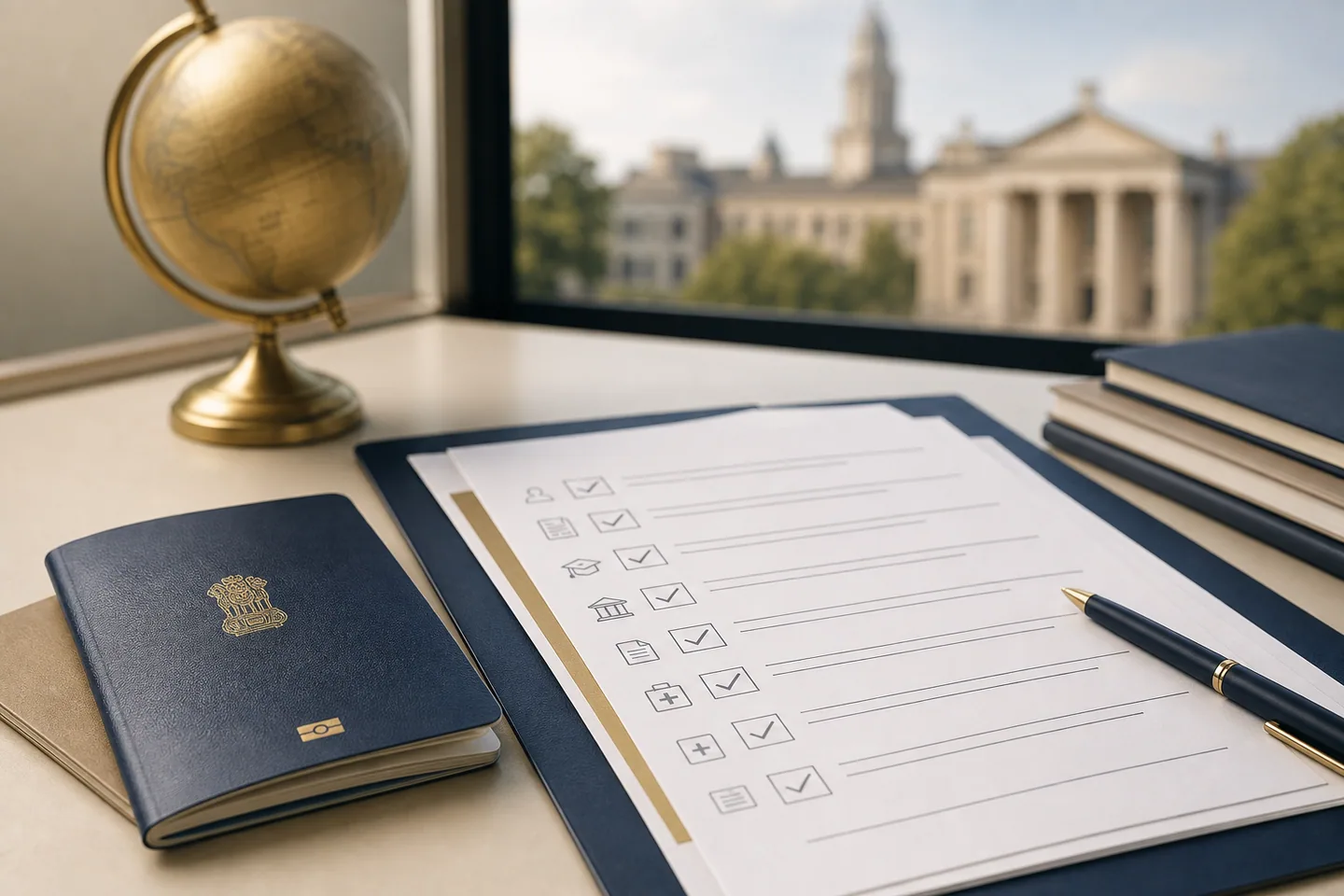
A study visa file becomes easier to review when the documents are organised before forms and statements are drafted. Start with records that establish who you are, what you plan to study, why the course fits your background and how the plan will be funded.
The exact checklist depends on the destination, institution, course and visa category. Use this guide as an organising framework, then confirm every requirement against current official instructions.
Identity and travel documents
- Current passport and relevant previous passports.
- Passport-style photographs in the required format.
- Birth, name-change or civil-status records when requested.
- Copies of previous visas, refusals and travel history where applicable.
Check that your name, date of birth and passport number are entered consistently. If academic records use a different name format, prepare the accepted supporting explanation rather than leaving the difference unresolved.
Admission and course records
- Offer, admission or enrolment document issued by the institution.
- Course name, level, duration, campus and intake details.
- Tuition deposit or fee-payment evidence, if required.
- Correspondence concerning conditions attached to the offer.
Read the offer carefully. A conditional offer may require an academic result, language score, deposit or another document before it becomes final.
Academic and language evidence
- Mark sheets, certificates, degrees, diplomas and transcripts.
- Accepted English-language test result for the institution and route.
- Backlog, grading-scale or medium-of-instruction documents when relevant.
- Evidence explaining a gap, course change or unusual academic progression.
Do not submit a score simply because it is accepted somewhere. Confirm the correct test type and minimum overall and individual skill requirements for your specific route. You can compare IELTS and PTE for study abroad before choosing a test.
Employment and activity history
Prepare employment letters, salary records, experience certificates or business documents that support the dates and responsibilities stated in your application. If you were preparing for examinations, caring for family or undertaking informal work, discuss how that period should be described accurately.
Financial and sponsorship records
- Bank statements and acceptable proof of available funds.
- Education-loan approval and disbursement documents.
- Sponsor identity, relationship, income and employment or business evidence.
- Scholarship or funding letters and the conditions attached to them.
Financial figures should tell one understandable story. Large recent deposits, inconsistent income records or unexplained transfers may create questions. Keep supporting evidence for the source of funds and calculate tuition and living costs using current official amounts.
Statements, forms and supporting explanations
Draft forms only after the timeline is clear. Education, employment, addresses, travel and refusals should remain consistent across forms and supporting statements. Read every answer before submission; you remain responsible for the accuracy of the information.
A final quality check
- Use clear scans showing every edge and page.
- Follow accepted file formats, sizes and translation rules.
- Check expiry dates and intake timelines.
- Keep a copy of the final forms and every uploaded file.
- Reconfirm official requirements immediately before submission.
If you are still shaping the route, explore study-abroad planning and study visa support. When your basic details are ready, complete the free visa assessment so the Visa Guy team can identify the questions that need attention.
 Which Country Is Right for You to Study Abroad?
 9 Questions to Ask a Study Visa Consultant Before You Pay
 Study Abroad Scholarship Checklist for Indian Students